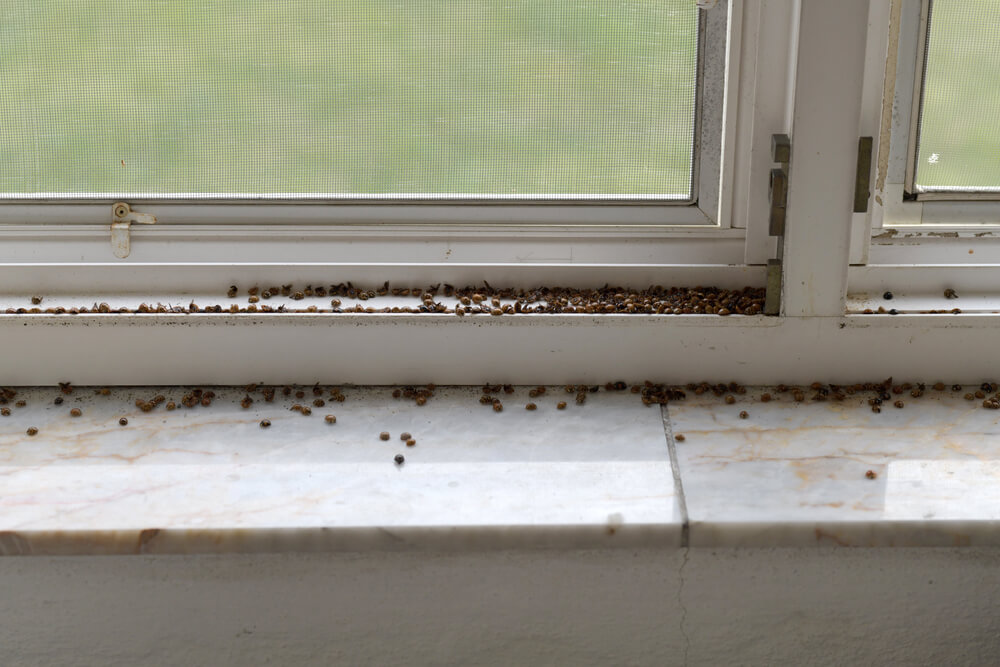
It’s all fun and games until you notice tiny specks on your window sill. “It’s okay,” you tell yourself, “Nothing a thorough cleaning can’t fix.” But then you see that the specks are actually moving. So you look closer, and it’s not dust or dirt, but bugs, aargh! But what are those tiny black bugs doing in your house, near the window sill? And more importantly, how can you get rid of tiny black bugs near your windows?
Notice little black bugs crawling around your house near your windows? You may want to grab the vacuum, head to the hardware store, or call the exterminator.
To be clear, if you see bugs near the windows, there’s nothing wrong with your housekeeping skills or your house. Bugs are persistent little critters and may easily enter a home through the windows. While you might be able to fix some minor issues with your home, you’ll sometimes need professional assistance.
You shouldn’t laugh off a lot of insects or even just one insect in your house. Instead, you should learn to recognize these pests and get rid of them. That’s the best way to protect your home. Way.com, your friendly neighborhood home and auto insurance app, has compiled a list of the most common culprits and solutions for windowsill pests.

What are those tiny black bugs in your house, near the window?
Many little bugs might be creeping around your window sill. Many little bugs might be creeping around your window sill. Clover mites, ants, booklice, and phorid flies are some of the most common bugs on window sills.
These bugs may stay in another section of the house yet enter through the window. Cracks in the window or leaving the window open may often result in little bugs on the windowsill.
Identifying those little windowsill bugs
If the bugs have begun to intrude on your windowsill, this indicates that they are either eating something there or that you have many of them, and they are beginning to investigate and expand their area.
The first step is to attempt to identify them. A magnifying lens and a strong light may be useful in this situation. Examine carefully to find out
- What their color is
- How their bodies are shaped
- How many legs they have
Mites are related to spiders and ought to have eight legs rather than the six that most insects have.
When crushed, clover mites frequently leave a reddish mark.
Carpet mites have the appearance of brown ladybugs. They are typically around 4 mm in size, whereas clover mites can grow up to 7 mm.
Booklice are little gray insects that resemble dust on the window sill. These feed on mold and enjoy damp surroundings, which windowsills frequently provide. They will consume any little quantities of algae or fungi that grow there.
There are many more types of insects and lice that may live on a windowsill, so spend some time looking at photographs in books or on the internet to identify them accurately. Once you’ve pinpointed the problem, you may work on eliminating it.
Mites
You’re looking at a mite if the black bugs scurrying around your windows have an orb-shaped body with eight legs and no wings. Mites are more bothersome than harmful.
Clover mite
These mites are approximately the size of a pinhead and seem black from a distance but are brown or red up close. They are drawn to windows that get a lot of sunshine.

If the small bugs crawling around your windows fit this description, you can relax. Clover mites are widespread but absolutely harmless. The worst thing that can happen with clover mites is the reddish stain they’ll leave if smashed.
How to get rid of clover mites
Clover mites in your home are quite easy to get rid of. In most cases, you won’t even need to call a professional exterminator. Suck up all the mites you can locate with your vacuum cleaner. When done, quickly empty the contents of your vacuum so the clover mites don’t crawl back out and resume their business. Using a vacuum will also assist in preventing discoloration in your house. That’s it – welcome to your mite-free home.
Carpet mites
They are bigger than clover mites and have a hard, oval shell. They might be black/brown and have black and white spots. These mites prefer animal fibers and leather and are frequently found in carpets.

Carpet mites on your windowsills might be from curtains, neighboring furniture, or a new item that was already infected. Carpet mites will not hurt you, but they may cause significant damage to furniture, upholstery, blankets, clothing, and other fabric goods.
How to get rid of carpet mites
If carpet mites find their way from the window to a piece of furniture or fabric, treat the area with boric acid and vacuum within two hours. You can also try natural methods like essential oils, vinegar, or food-grade DE (diatomaceous earth). Contact an exterminator for assistance if you suspect they’ve spread to more regions than you can handle.
Booklice
Booklice, also called psocids, aren’t true lice, despite their name. These small grey beetles on the window sill thrive in humid situations because they feed on mold and fungus. These include areas surrounding windows where condensation accumulates.

You may find them in furniture, wallpaper, around potted plants, and books. Psocids do not bite, spread illness, or cause harm to food or cloth. However, while they are quite harmless, many can be highly bothersome.
How to get rid of booklice
Using insecticides to control booklice in the house is typically unnecessary. Instead, control the things that may produce moisture and humidity in your house. Reduce the relative humidity in your house to less than 50% to prevent mold formation. Mold is a food source for booklice. An air gap beneath potted plants on window ledges will also reduce humidity. Clean your window sill with antifungal or mild bleach regularly to prevent the little grey bugs from returning.
Ants
They are probably the most easily identifiable of the tiny black bugs in houses near windows. Ants have three separate orb-like body sections that make up a head, midsection, and rear, two antennae, and six legs. Ants prefer to live and travel in colonies. Thus even one might indicate the presence of many more.

A solitary ant or two may find their way into your window if they’ve come in from your yard or garden in search of nourishment. A swarm or trail of ants might indicate that they are attempting to nest someplace in your home. Ants will attack the wood in your home, digging holes and tunnels to deposit eggs and establish colonies.
How to get rid of ants
The only method to eliminate an ant infestation is to eliminate the nest. Though ants are the most visible easy-to-recognize tiny windowsill bug, they can also be the most difficult to get rid of on your own. If you suspect an infestation, call an exterminator for assistance.
Phorid flies
Commonly known as hump-backed or scuttle flies, phorids are tiny black bugs living near windows. Their name comes from their distinctive hump-back, utilized to retain fat reserves.

Phorid flies frequently prefer to scurry about on your windowsill rather than fly away. Phorid flies live outside around flowers and decomposing debris. In the summer, porch lights lure them inside your home. Indoors, they may fly about your head and land on your meal. These little black beetles breed wherever there’s enough moisture, so catch the infestation early. They are not, however, hazardous, and there are methods for dealing with them.
How to get rid of phorid flies
First, you must determine where the flies are nesting. Look for items like rotten vegetables in bins, condensation pans under refrigerators, holes in piping in basements, and anywhere else that may be wet or where organic material may be decomposing. Once you’ve located their nest, clear up whatever the flies are feeding on. Sanitation is the best way to combat phorid flies. Taking away their food supplies and the moisture that allows them to reproduce will prevent future generations from growing.
How can I keep tiny black bugs near the window in my house at bay?
Keep up with cleaning and regular perimeter treatment to your windows to keep little black windowsill bugs from swarming around them. Here are some simple cleaning actions to help keep windowsill bugs at bay:
- Store food and consumables in a cool, dry place.
- Vacuum regularly to keep the area around the windows free of dust and dirt.
- Use a bleach solution to wipe off the windows and sills, killing any mold or bacteria.
Here are some easy options for window treatment.

- Apply a chemical treatment, available at any hardware store, on the outside borders of your windows.
- You may spray or dust the inside of your window frames with DE (diatomaceous earth) to keep pests at bay.
- Windows that smell like peppermint or other essential oils are inviting to us but not pests.
How to get cheap home insurance
Homeowners insurance is a must if you care about the safety of your house (and your family). But, first, you must shop around to avoid spending too much on inadequate home insurance coverage.

Use Way.com, the insurance super app, as your go-to partner for your home insurance policy. Finding the perfect insurance coverage for your car or house is a breeze with Way.com. Simply download the app, answer a few questions, and Way.com will handle the rest.
We’ll make a thorough comparison of plans from leading providers. Then, once you’ve decided on a policy, we’ll take care of everything else, including renewals, paperwork, and phone calls.
Here’s more info on top-rated airport parking, the best parking spots in your city, affordable auto insurance, easy auto refinance, and high-quality car washes near you.
Get 10% off in the Way App in the Way App!

- Scan and get the Way App Download the Way App
- Log in to your account
- Use code FIRST10 at checkout

Renée Martin is a travel and car expert who focuses on smart car ownership and road travel in the U.S. For the past 6 years, she’s been helping make car ownership, driving, and trip planning easier for everyday travelers.

























.jpg)