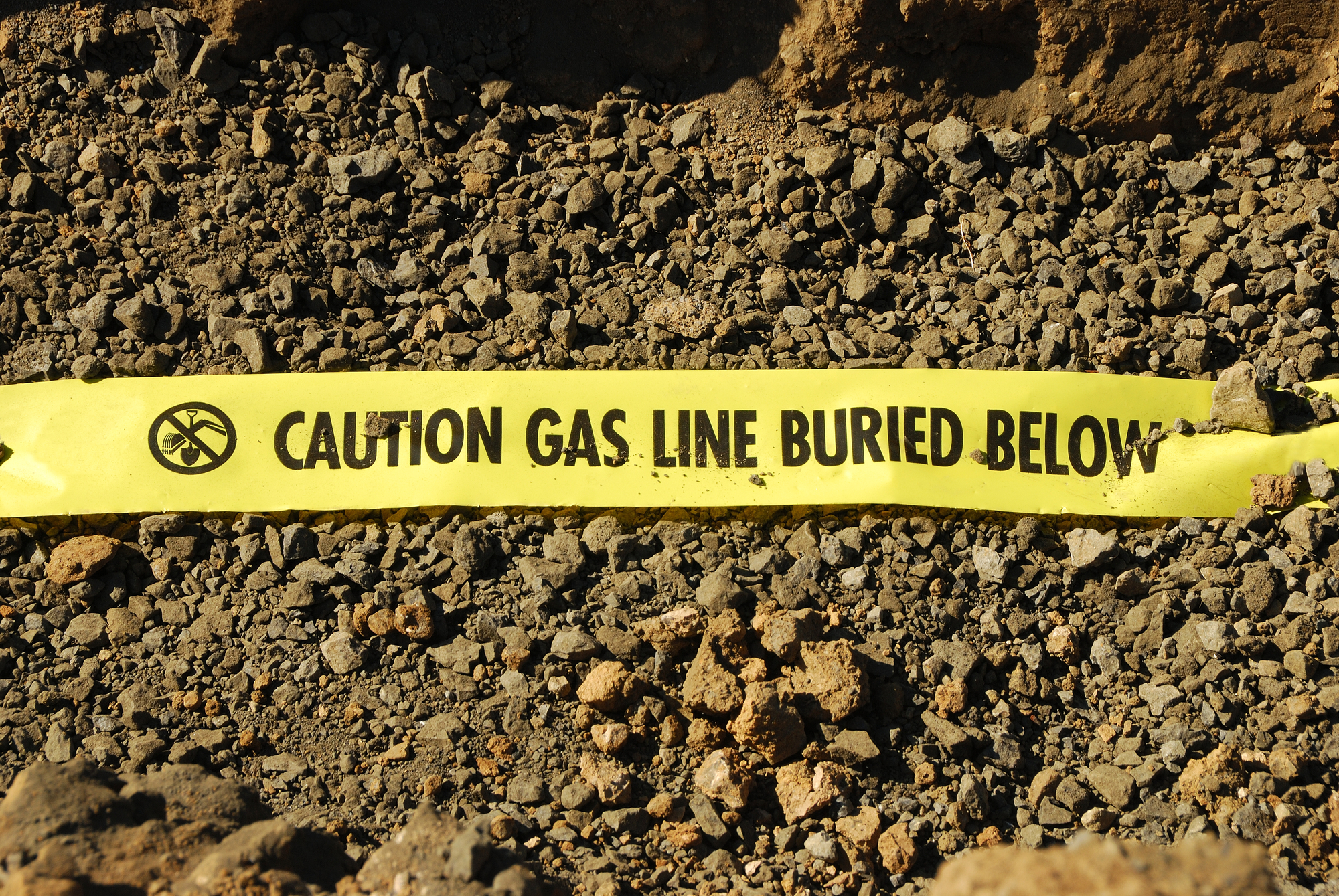
Have you ever wondered how deep gas lines are buried? Sounds trivial, right? But it’s not. It is something you should be conscious and cautious of. Read to know more.
How deep are gas lines buried?
The country’s local government usually decides how deep the natural gas lines can go. That’s why the depth varies around the globe and can be specific to even cities. In the United States, a gas line should be between 18 and 24 inches deep.
Most of the time, the main gas lines are at least 24 inches deep. The service gas lines are closer to the main lines and can be found by going 18 inches underground. The rules clearly state that natural gas lines cannot be less than 18 inches deep in California. In New York and New Jersey, it’s at least 24 inches.
The should s and shouldn’t s
- You shouldn’t bury the gas lines any less deeply than the law requires.
- Gas lines that aren’t deep enough are more prone to damage.
- Prioritize the laws in your area to ensure your family’s safety and make it easy to fix gas lines in an emergency.
- Professionals should only put in gas lines.
- All gas lines must meet the rules for building in the area.

Why is depth necessary?
The depth is very necessary in order to avoid any kind of damage to gas lines. Most gas lines in the US tend to be shallower when they are closer to private property. The chance that someone will hit a gas line by accident goes up when there are more people in an area and when there is more traffic or work.
A serious crash might take a few inches of asphalt and concrete out of the road or street, but that’s not even close to being deep enough to reach the gas lines, usually buried at least two feet down. So, even a mistake won’t cause a leak or explosion. To get to that depth, you need to use specialized drilling tools, which are usually only used by people who know how to use them right and won’t damage the gas line.
How can I practice safety around gas lines?
- Educate yourself about gas lines and learn how to locate one.
- If you need to dig around a gas line, do it with the help of professionals.
- Call your state’s gas hotline if you find any damaged gas lines.
Where can you find gas lines?
Gas line locations vary by city, but we can see some patterns in how they are set up in public places. Most gas lines are in places where people need them the most, like in public spaces and cities. In the United States, 811 numbers are used to find out where gas lines are and get other important information before contractors, repair crews, or private people start digging.
Aside from these public hotlines, there are also a lot of private services that help both construction crews and private people dig safely. GPRs are a great way to find out what’s under your feet. They let operators figure out the depth of gas, electrical, and other lines and valves without damaging the property or getting in the way. Last, colored flags and letters are often used to mark gas lines. If you see one of these, know that you are in proximity to a gas line.
What causes damage to a gas pipe?
Gas lines are made of plastic or metal but can still be damaged. Shovels and hand tools can even break them. Backhoes and skid-steers, which are powerful tools for digging, are even more likely to break gas lines.
Even though you are much more likely to damage a gas line when using high-powered excavating equipment, you can damage service lines with almost any tool. Deep gas lines can be cracked or broken with augers, post-hole diggers, and mattocks.
What to do if you find a damaged gas pipe?
If something hits a gas line, it can cause a leak or even a full-blown explosion. The severity depends on the type of line, what hits it, how, and where on the line the break happens. If you hit a gas line in the US, you’ll need to call your state’s gas line hotline.
Damaging a gas line and not telling anyone about it can be dangerous and cost a lot of money. Fines can go up to $50k. It is $4,000 in Kentucky, $10,000 in Washington, and $50,000 in California, along with the cost of fixing the damage.
How can I safely dig around gas lines?
To dig around a gas line, you must first find out where the gas lines and other utilities run on your property. You can call 811 to get the utility lines on your land marked for free. After you call, a professional will be sent to your property within a few days to mark where all utility lines go.
Since 811 is a free service, it won’t cost you anything. If your gas lines haven’t been marked by a professional, don’t dig. Even after the utilities on your property are marked, you will often have to change your plans for digging. So, it’s best to wait until they’ve been graded before you plan your project.
Before you start digging deeper than 12 inches, you should have a professional mark where your utility lines are. Even after the professional’s approval, do not dig closer than 18 inches to any gas line. Even if you don’t hit the gas line directly, damage can be done if you dig too close to it.

Wrap up
If you are to practice caution around gas lines, you should know that:
- In the United States, gas lines are buried either 18 inches or 24 inches deep.
- Local law will tell you how deep the gas lines on your property need to be.
- If you dig and hit a gas line, call 911 right away.
- Before you dig, call 811 to find out where the deep gas lines are. This service will mark your utilities for free.
- Before digging deeper than 12 inches, you should call 811 first.
- Don’t dig within 18 inches of a gas line that is buried.
Here’s more info on top-rated airport parking, the best parking spots in your city, affordable auto insurance, easy auto refinance, and high-quality car washes near you.
Get 10% off in the Way App in the Way App!

- Scan and get the Way App Download the Way App
- Log in to your account
- Use code FIRST10 at checkout