No, it is NOT illegal to hit a deer and drive off. No one will sue you for fleeing the scene – unless there is property damage or injury. Even if not required, reporting the collision is the right thing to do. Why? Safety first, and if needed, it’s better for insurance. Find out what to and what not to do if you are involved in a deer-vehicle collision.
Is it illegal to hit a deer and drive off?
Some states require you to report an animal-vehicle collision, but it is not illegal to hit a deer and drive off. However, it becomes illegal if the accident damages another car or property. For example, you must legally report any accident that causes injury or damage of $500 or more in Florida.
After a collision, you can notify animal control or the local police. If there is property damage at the scene of the incident or another car is involved, the police will help you with the next steps.

Is it safe to leave before animal control or police arrive?
Is the deer lying in the middle of the road? Driving off before help arrives poses a serious risk to other vehicles coming down the same road.
While it is not illegal to hit a deer and drive off, it can be irresponsible. Park on the side of the road and turn on your hazard lights to warn other drivers. Do not approach the deer – if it is alive, its strong hooves and legs can still hurt you.
What to do if you hit a deer while driving?
If you are at the wheel, don’t be a deer in the headlights yourself! It is an accident, and you must check your safety first. If there’s anyone else in the car, make sure they are okay too. You must do this quickly, especially on a highway – other vehicles might be approaching.
Follow these steps after a deer-vehicle collision:
- Pull to the side of the road if there is no major damage to your car.
- Turn on the hazard light immediately to warn other drivers coming down the road.
- Stay inside your car till you have accessed your and your car’s safety.
- Call 911 if anyone is injured. If another car or other property is involved in the accident, report the accident to the police.
- Call animal control or the non-emergency police number if there are no injuries or damage.
- Even if there is no visible damage to your car, check for fluid leakage, tire damage, or loose parts that can be a safety hazard.
- Take photos of your car and the roadway, and collect relevant details to file a claim.
Click Here to Zoom Your Way to a New Car Insurance Policy in Minutes

Is it illegal to hit a deer and drive off with the carcass?
You can keep your roadkill in all US states except one. It is illegal to collect roadkill in Texas. In seven states – California, Arkansas, Mississippi, Alabama, Georgia, Florida, and Wisconsin – you do not have to file a report or get a permit.
All other states require you to report it and/or get a permit, tag, or license from the concerned authorities. For example, in West Virginia – which currently tops the table for animal-collision claims – you need a non-game tag from the Division of Natural Resources (DNR) to take the deer home.
Does insurance cover deer-vehicle collisions?
Comprehensive car insurance covers damage caused due to unpredictable situations – like a deer-vehicle collision.
It is a common misconception that animal-collisions fall under “Acts of God.” Your insurance company will not waive the deductible, nor will the government cover it. The law varies from state to state, but minimum coverage usually does not cover deer collision damage. Some states require only liability coverage, but comprehensive coverage is the best bet.
Remember that your car must physically touch the deer for the accident to qualify as a deer-vehicle collision. Therefore, if you swerve off the road to avoid hitting a deer and hit a fence, post, tree, or any other property instead, comprehensive coverage won’t work.

How to avoid deer-vehicle collisions
Recently, over 2 million animal collision claims were filed in the US. Deer-vehicle collisions account for over 60% of the reported incidents. In addition, animal-related road accidents also result in 200+ fatalities. So though it is not illegal to hit a deer and drive off, a deer-vehicle collision is not something to take lightly.
Here’s what you can do to reduce the chances of hitting a deer while driving:
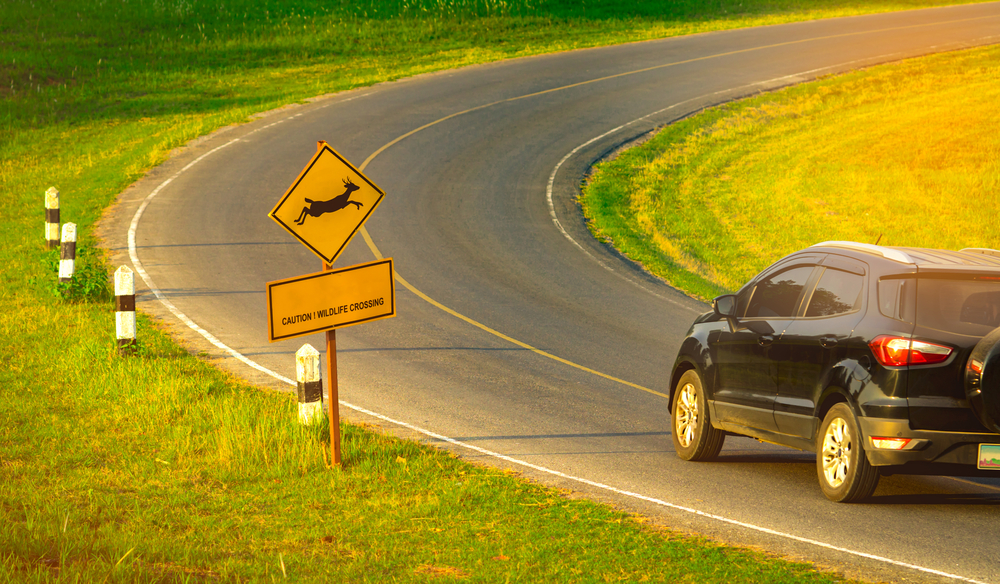
- Look for roadside signs – yellow diamonds with a deer icon – that indicate high deer traffic.
- October to December is “Deer Season” – stay alert when driving during this time.
- Deer are most active during dawn and dusk. Turn your high beams on to get the best visibility.
- Deer move in packs; if you see one, usually there are more coming the same way. Slow down and proceed carefully.
- Keep to the middle lane on highways; this allows more space for the deer to cross on either side and is your best bet to avoid a collision.
- Studies prove that hood whistles and other inventions that claim to scare off deer mostly do not work. Just honk and keep honking till the deer move out of your way.
- If a deer jumps onto your path, don’t swerve. Instead, step on the brakes calmly and stay in your lane. Swerving might make you lose control and cause more damage. Accidents that do not involve direct contact with animals, do not count as deer-vehicle collisions and might not be covered by comprehensive auto insurance.

Here’s more info on top-rated airport parking, the best parking spots in your city, affordable auto insurance, easy auto refinance, and high-quality car washes near you.
Get 10% off in the Way App in the Way App!

- Scan and get the Way App Download the Way App
- Log in to your account
- Use code FIRST10 at checkout