Drivers must never ignore traffic while they’re on the road. These signs tell you about traffic rules, hazards to expect, where you are, how to get to your destination, and where services are en route. Despite this, there are plenty of experienced drivers who don’t know what all the traffic signs mean. This article will tell you all about important traffic signs and their meanings.
There are rules about where you can drive, when, and how fast. These rules help keep traffic flow smooth and, thereby, drivers and their passengers safe. Road rules include how to get in and out of lanes, who has the right of way, and how to park. Traffic signs play an important role in informing you about these rules.
Traffic signals, road signs, and pavement markings are all ways to control traffic. Law enforcement, highway workers, and school crossing guards can also help direct traffic. Drivers must do what these people tell them.

Traffic sign colors and their meanings
Red

When you see a red sign, you need to stop or move to the right. Red is for stop signs and signs that say “yield,” but it is also for “do not enter” signs and “wrong way” signs. Red is also used on signs that say do not make a U-turn, do not turn on red, and sometimes do not park.
Blue

Blue signs aren’t regulatory signs. Instead, they indicate services you’ll find on the way. You’ll see these signs usually on expressways and highways. They help guide travelers to locations such as rest stops, gas stations, restaurants, and hospitals. It may also show hotels, tourist attractions, campgrounds, picnic spots, etc.
Yellow

These road signs alert drivers of possible dangers or changing road conditions ahead. For example, they may warn you of a narrow bridge ahead, a railroad crossing, a no-passing zone, or curves in the road. Yellow traffic signs may also have meanings like – a merging point, a pedestrian crossing, a dead-end, an uneven surface, a concealed cross street, or any other potential hazard.
Fluorescent Yellow/Green

A relatively new color on our roads, these fluorescent-colored signs are for pedestrian, cycling, and school caution signs. They are also increasingly used for construction signs. The advantage of this color is that it is quite visible even in foggy or rainy conditions.
White
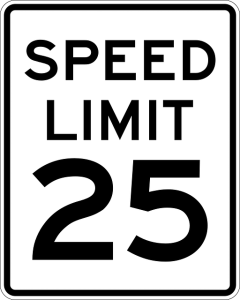
White traffic signs represent traffic restrictions, such as speed limits, that drivers must follow. They also display useful information, such as state highway markers.
Brown

Brown signs, like blue road signs, are not regulatory signals. Instead, these signs denote areas of recreation and cultural interest. Brown road signs will point you to historical places, parks, picnic spaces, and other recreational locations.
Traffic sign shapes and their meanings
Octagon

A traffic sign shaped like an octagon is always a stop sign. Stop completely at a junction controlled by this sign. Stop at the designated stop line, before entering the crosswalk, or before entering the intersection. Allow other vehicles or people in your route to pass.
Equilateral triangle

You’ll see this shape mostly on yield signs. Allow for the right of way. Slow down and allow vehicles in your path to pass. Stop, if necessary, before proceeding. If pedestrians are in or about to enter a crosswalk, wait until they have crossed the street before proceeding.
Diamond

Diamond-shaped signs are warning warnings. The meaning of these traffic signs is that there are potential traffic risks. The words or images on the sign will explain why you need to slow down or exercise additional caution.
Pennant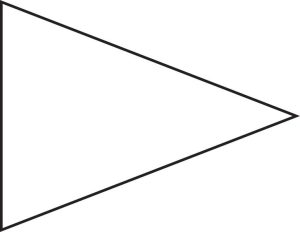
You’ll see this sign on the left side of the highway or road. It alerts you to the presence of a no-passing zone.
Rectangle

These are regulatory or guide signs. Vertical signs, such as speed limits, indicate what you should and should not do. Horizontal signage provides drivers with directions or information about services they may require.
Pentagon

The meaning of a traffic sign shaped like a pentagon is that there’s a school crossing or school zone nearby. The sign might be yellow or fluorescent yellow/green.
Crossbuck

You’ll notice that this is the shape of all railroad crossing signs at each crossing. In addition, there may be a number under the crossbuck that indicates the number of sets of tracks.
Circle

If you see a circular sign, that means there’s a railroad crossing ahead.
Common traffic signs and their meanings
Most of these signs are diamond-shaped and yellow with black wording or symbols. These signs tell you to slow down and be prepared to stop if required; a specific circumstance or hazard is ahead. Here are some common traffic signs and their meanings:
Speed limit sign
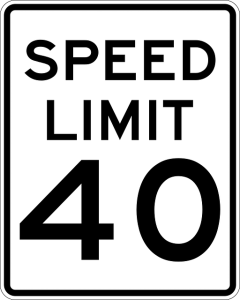
This is a regulatory sign. As its name indicates, speed limit signs let you know the maximum or lowest legal speed at which vehicles must drive. Drivers must not exceed the limit indicated by the sign.
No U-turn sign

Another regulatory sign, the no-U-turn signs you see at intersections, notify that the driver is not legally permitted to make a U-turn (a turn in the road to go in the opposite direction). If a driver needs to make a 180-degree turn in an area where no U-turns are permitted, they must wait for an intersection that permits this type of turn or find an alternate route, such as traveling around the block.
Two-way traffic sign

You’ll usually see this sign in front of or on two-way roads. These two-way traffic signs let drivers know they are leaving a one-way street and going onto a street with traffic going in the opposite direction. This could make it harder for the driver to pass other cars.
Road narrows sign

This warning sign indicates that the road ahead will be narrower than the one you’re on now. This notice alerts you to potential hazards ahead, but no urgent action is required.
Narrow bridge sign

Don’t confuse the narrow bridge with the narrow road sign. The narrow bridge sign informs drivers that the bridge ahead is narrower than the road they’re currently on. Therefore, drivers should slow down and keep an eye out for oncoming vehicles when crossing a narrow bridge.
Deer crossing sign
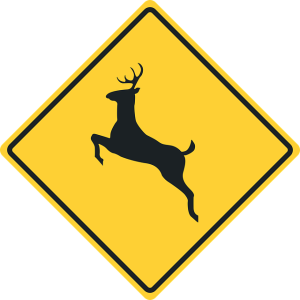
These warning signs are placed in areas where deer are known to cross the road. When reaching a deer crossing sign, drivers should be attentive and ready to stop in case any wildlife decides to cross the road ahead. Drivers should also be extra cautious around dawn and dusk, as this is when deer are most likely to appear.
Interstate sign
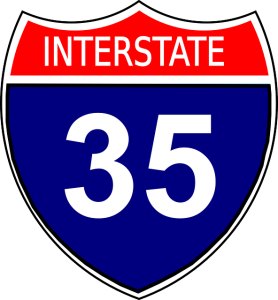
These directional signs indicate the route number of the highway you’re on. They frequently include the direction as well as the name of the state. A route that connects two or more states is referred to as an interstate. When traveling across state boundaries, Interstate signs assist motorists in navigating.
Men at work sign

This is a warning sign indicating road workers are on or near the route. Drivers should be on the lookout for this notice and be prepared to slow down or stop if they see it. Men at work signs are frequently seen in construction zones where speed limits are restricted.
Yield Sign
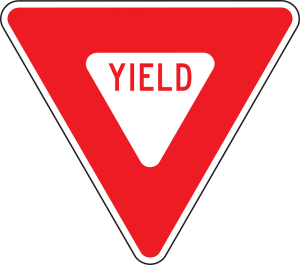
When approaching this regulatory sign, drivers must slow down and yield the right-of-way to pedestrians or vehicles coming from the other direction.
Merge sign

Drivers who see this regulation sign should know that two distinct lanes will merge into one lane ahead. The merging traffic sign will normally specify which lane should merge into the other. Drivers on the major roadway should be cautious of merging vehicles. Merging cars should yield to traffic that’s on the main highway.
Do not enter sign
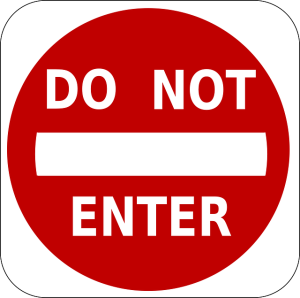
Drivers that come across a do not enter sign are not permitted to enter the road, ramp, or crossover where the sign is posted. Do not enter signs typically show opposing traffic, implying that the traffic will be approaching the driver. There is a high risk of collision if drivers enter the allocated traffic lane.
Divided highway sign

The Divided highway sign indicates that the two opposing traffic lanes on the highway ahead are separated by a physical barrier or median, such as a guardrail, concrete barrier, or a strip of land. When approaching a divided highway sign, drivers should be aware of their surroundings and obey any extra signs that may be placed on the divided length of the highway.
Dead end sign

Dead end signs are placed at the beginning of a road or street to alert drivers that the path they are traveling leads to a dead end or cul-de-sac. Drivers who come across a dead-end sign should understand that the roadway they are on will not link to another.
School crossing sign

School crossing signs alert drivers that they are approaching a crossing where schoolchildren will cross the street. The school crossing sign is a hybrid of two signs: a school area sign and a plaque with a diagonal downward pointing arrow. The two signs are part of a sign assembly known as a school crossing sign. Drivers who come across a school crossing sign should watch for youngsters, slow down, and heed crossing guard signals.
Pedestrian crossing sign

When they see a pedestrian crossing sign, drivers should be on the lookout for people who might walk or run out in front of them. Pedestrian crossing signs let drivers know ahead of time where a lot of people are walking so they can be ready to slow down or stop quickly. In addition, drivers who see pedestrian crossing signs should stay alert to avoid getting into an accident.
Do not pass signs

Do not pass signs mean that the driver is on a stretch of road where it would be dangerous to pass another car. Passing zones are determined by how far the driver can see ahead. This sign means there’s danger ahead that you can’t see. This could be a hill, a curve, an intersection, a hidden driveway, or another place where a car is getting on the road. If a sign says “do not pass,” it is illegal to pass another car.

Knowing traffic signs and their meanings can help stay safe on the road. Despite that, if you do run into trouble, you must ensure that your car has the best insurance coverage possible. Way.com can help you find auto insurance that’ll give you maximum bang for your buck. How? By letting you compare car insurance quotes from all the best providers in the country.
Here’s more info on top-rated airport parking, the best parking spots in your city, affordable auto insurance, easy auto refinance, and high-quality car washes near you.
Get 10% off in the Way App in the Way App!

- Scan and get the Way App Download the Way App
- Log in to your account
- Use code FIRST10 at checkout

Renée Martin is a travel and car expert who focuses on smart car ownership and road travel in the U.S. For the past 6 years, she’s been helping make car ownership, driving, and trip planning easier for everyday travelers.